




It’s a familiar situation: you are standing in front of a supermarket shelf stacked with the same type of product, deliberating which brand to buy. It could be bottled water, orange juice, baked beans or toothpaste.
What is brand equity?
After studying what’s on offer, you narrow it down to two products. You look at one and then the other, you read the label, and conclude that if not identical, they seem very much the same. You spend some time thinking whether you should get the cheaper one, but in the end, as many times before, you buy your favourite brand.
What happened here is that you opted for a more expensive product, although its content was very similar to the cheaper product. You had decided to pay more, because the brand as a brand, has value to you as the consumer.
In this case, the price premium you paid is brand equity. It is the share of the brand as such in the price of the product. If you paid €2 for a litre of your favourite-brand orange juice (“made from concentrated orange juice”), rather than €1 for a generic alternative (also “made from concentrated orange juice”), brand equity in your chosen product is €1.
How brand equity works?
Brand equity applies not just to diverse product categories (food and beverage, apparel, household appliances and others), but also to services. If you run a restaurant, a rent-a-car company, or a consultancy, or provide any other business service, brand equity is a factor in your bottom line.
Going back to our example, if consumers are prepared to pay double, despite the cheaper alternative being readily available, branding experts would say that the premium product has strong brand equity. On the other hand, the cheaper product has weak brand equity, and must compete on other points, chiefly on price.
Maximize the brand ROI
This is why strengthening brand equity, maximising brand value and managing your brand have become such hot topics not just in corporate branding and marketing departments, but in boardrooms around the world. For any modern business, a major part of profit is brand-derived. Conversely, if you are looking at thin profit margins, the problem might not be efficiency, demand, material costs or other purely economic drivers, but your branding strategy.
Here, a deeper understanding of what makes brands tick helps maximise return on brand-investment. For instance, all the above might have led you to believe that brand equity is somehow “in the product.”
And indeed, this was marketing orthodoxy, until Kevin Lane Keller – one of the world’s foremost branding experts – set things straight with his “customer-based brand equity” model. According to Keller, brand equity is in the minds of the consumers.
Make your brand top-of-mind
Instead of a simple “economic” definition of brand equity as a price differential, this model (known as Keller’s four-stage “CBBE Pyramid”) looks at how quickly a brand springs to mind when a consumer searches for a product (salience); what it means to consumers at both rational and emotional levels (meaning); and, what kinds of feelings and judgements it evokes (response).
Finally, at the top of the pyramid is brand resonance. Brands that resonate most widely have the strongest brand equity. Their customers will be loyal, to the point of being uninterested in other brands, while, importantly, advocating and recommending their favourite brand to others. At this stage of the pyramid, brand and its customers are in tune.
Brand equity is good for business
As a branding expert, my feeling is that whichever way you choose to strengthen brand equity, you are doing something good for your business – something that will pay off both in the short and the long term. But, of course, taking a data-driven, research-based and efficient route to brand improvement is better than trial and error.
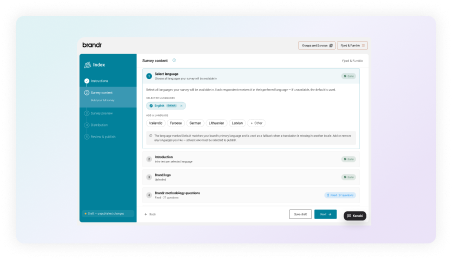
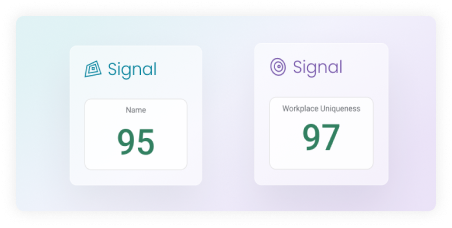
This is how I see my brandr Index. I have developed it over the last 10 years to measure “brand health”. It is based both on practical experience and analytics: my team and I have studied hundreds of brands, to derive a set of metrics that will identify areas of improvement for your own brand.
Armed with this analytical firepower, you will be able to troubleshoot your brand’s underperforming aspects and improve its equity. Because brand equity (and, by extension, a large share of your profits) is “in the mind of the consumer,” it pays to understand what your customers think about your brand.




.jpg)
.jpg)