
Start free — one survey per product. No card, no time limit.

Start free trial →

Methodology

What we measure, and why it holds up.

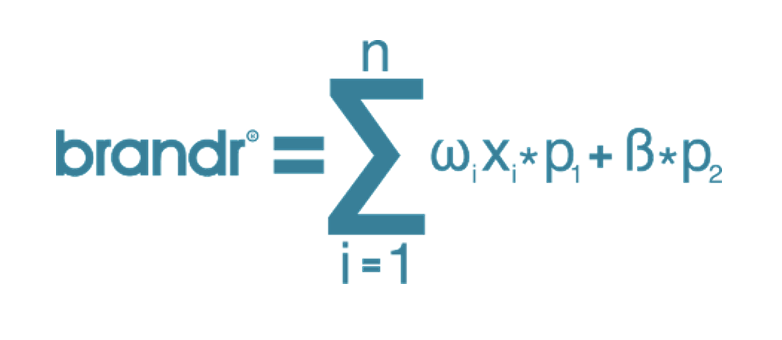
brandr Index and brandr Employer Index are built on a published
research framework, not a questionnaire someone wrote in a sprint.
This page explains the model in plain language.

This is some text inside of a div block.

No card. No time limit. One survey per product.

Thank you! Your submission has been received!
Oops! Something went wrong while submitting the form.

Origin

The model came before the software.

Developed by Dr Friðrik Larsen at the University of Iceland, the first person to hold a PhD in brand research within the energy sector, and published across three books with Palgrave Macmillan, Springer and Routledge.

Academic origin

Built inside a university, tested against published literature and defended as doctoral research.

Commercial testing

Refined over a decade of client work across more than 50 industries.

One author

A single framework, maintained by the person who wrote it — not assembled from borrowed questions.

The model

Two indexes. Seven dimensions.

Each index measures a small number of dimensions. Beneath each dimension sits a set of drivers, the individual things respondents actually answer on.

brandr Index

Four dimensions

01

Perception

02

Social responsibility

03

Differentiation

04

Segmentation

Drivers include positioning, trust, loyalty, brand image, brand attributes, perceived quality and relevance.

brandr Employer Index

Three dimensions

01

Branding

02

Equality

03

Human resources

Drivers include leadership clarity, strategic alignment, trust in management, employer reputation, purpose credibility, engagement, advocacy, retention risk and internal brand consistency.

How the score is built

Two numbers, not one.

A Score tells you how strong the brand is. A Recommendation tells you whether people will speak for it. They come from different places in the model.

Output  one

Score

The average of the dimensions.

( 80 + 80 + 72 + 79 ) ÷ 4  =  78

ANSWERS

How strong is the brand right now?

A single figure you can benchmark against your industry and track from one measurement to the next.

Output two

Recommendation

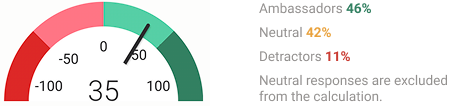
Ambassadors minus detractors.

46%  −  11%  =  +35

ANSWERS

Would people actively speak for you?

Advocacy, not satisfaction. It can move in the opposite direction to the Score, and often does.

Benchmarks

A score means nothing on its own.

Every result is read against a comparison set built from more than 50 industries and over 15,000 analysed responses, gathered across ten years of fieldwork.

50+

benchmarked industries

15000+

survey responses analyzed

10+ years

of brand tracking

Where the two meet

The measurement no single tool can produce.

Because both indexes are built on one framework and run in one system, the distance between them is itself a number.

brandr Index

78

how the market sees it

The gap

6

points of misalignment

brandr Employer Index

72

how your people live it

A common question

Why not just run your own survey?

You can. It will tell you what your respondents said. It will not tell you whether that is good.

No comparison set

A score of 72 means nothing without knowing what 72 looks like in your industry.

No consistency over time

Questions that change between waves produce a line you cannot read.

No validated structure

Questions written ad hoc measure whatever they happen to measure.

Built on research

The methodology has an author.

Most brand trackers are built by software companies.
This one was built by the person who did the research.

brandr Index was developed by Dr Friðrik Larsen, Associate Professor of Marketing at the University of Iceland and the first person to hold a PhD in brand research within the energy sector.

The model came first.

The software was built around it, not the other way round.

Every score traces to a published framework.

You can read the method, then check the maths.

Ten years of benchmarks.

Across more than 50 industries, not a sample of three.

"Fridrik Larsen has opened up a new area of study within energy marketing. In these fascinating interviews with some of the world's most influential energy sector executives, energy branding comes alive, fully justifying its importance for the current low-carbon transition."

Kevin Lane Keller

Professor of Marketing and author of Strategic Brand Management

Get started

See both sides of your brand.

This is some text inside of a div block.

No card. No time limit. One survey per product.

Thank you! Your submission has been received!
Oops! Something went wrong while submitting the form.