




Almost every organization, regardless of size, now has an employer value proposition. It sits in a careers page, a recruitment deck, an onboarding document: the promise of what working here offers and what the company expects in return. What far fewer organizations have is any reliable sense of whether that promise matches the experience employees actually have once they are inside.
A well-written employer value proposition that does not reflect daily reality is not an asset; it is a liability that surfaces in exit interviews and declined offers. The value is not in the wording. It is in how closely the stated proposition tracks the lived one, and that is something you can only know by measuring it.
What an employer value proposition actually is
An employer value proposition, often shortened to EVP, is the complete set of rewards and conditions an organization offers its employees in exchange for their skills, effort, and commitment. It spans compensation and benefits, but it does not stop there. Career development, the quality of management, flexibility, purpose, culture, and the sense of fairness across the organization all contribute to it. Taken together, these answer the question every current and prospective employee implicitly asks: why work here and why stay.
It helps to think of the proposition as a deal rather than a document. The document is just the articulation. The deal is what actually gets honored day to day. When the two align, the offer builds trust and turns employees into credible advocates for the organization. When they diverge, the gap does not stay hidden. People feel the distance between what they were promised and what they receive, and they act on it, usually by leaving.
What a measurable employer value proposition looks like in practice
A proposition that exists only as a set of aspirational phrases cannot be tracked, because there is nothing concrete to measure against. To become measurable, it has to be broken down into the specific dimensions employees actually experience and can report on. Rather than asking the vague question of whether people are satisfied, a measurable employer value proposition asks how the workforce perceives each distinct element of the deal.
In practice, those measurable elements tend to fall into a few clear categories:
- Compensation and benefits, and whether employees perceive them as fair relative to the market and to each other
- Career development and whether people see a credible path forward
- Management quality and the day-to-day experience of being led
- Fairness and equality of treatment across the organization
- The purpose and the degree to which people connect their work to something meaningful
Each of these can be measured, compared across groups, and tracked over time. That is the difference between a proposition you can manage and one you can only hope is working. A statement that the company "invests in its people" tells you nothing you can act on. A measured finding that career development scores strongly among senior staff but poorly among employees in their first two years tells you exactly where the promise is breaking and for whom. Making the proposition measurable converts it from a recruitment message into something a People team can actually steer.
EVP versus employer brand: a distinction worth measuring
These two terms are used interchangeably, and the confusion causes real problems when it comes to measurement. The employer value proposition is the offer itself: the substance of what the organization provides. The employer brand is how that offer is perceived, both by people inside the company and by the talent market outside it. One is the promise; the other is the reputation that promise earns.
The distinction matters because the two can come apart. An organization can have a genuinely strong offer that is poorly understood, where what it provides is good, but nobody can articulate it, including the employees who benefit from it. Gartner found that only 16% of employees can describe what makes up their organization's EVP, meaning most people working somewhere do not have a clear sense of what they are actually being offered. That is not a problem with the proposition; it is a problem with perception and communication, and you cannot tell which one you have without measuring both sides. Measuring the offer tells you whether it is sound. Measuring the employer brand tells you whether anyone recognizes it.
Why most employer value propositions go unmeasured
Most organizations treat the proposition as something you create once and revisit occasionally, rather than something you monitor. It gets defined in a workshop, written up, and then assumed to be working. The reasons it goes unmeasured are familiar.
- It is treated as a communications deliverable rather than an ongoing commitment
- There is no baseline, so there is nothing to measure change against
- Employee feedback is collected through engagement surveys that ask about satisfaction, not about the proposition specifically
- Leadership assumes the stated and the lived versions are the same thing
The gap between stated and lived experience
The single most important thing measurement reveals is the distance between what the organization says it offers and what employees actually experience. A company may claim to offer exceptional career development, while employees experience stalled progression and unclear paths to promotion. The stated proposition and the lived one are two different things, and the gap between them is where attrition originates. An organization that never measures this gap is flying blind on the exact issue most likely to drive its best people out the door. Closing that gap requires first knowing how wide it is, which no amount of careful wording can tell you.
Treating the proposition as a recruitment slogan
A common failure is to build the proposition purely as an external recruitment message, a set of attractive phrases designed to win candidates, with little connection to the internal reality they will encounter. This works briefly and then backfires. New hires arrive with expectations set by the recruitment message, discover the experience does not match those expectations, and leave within the first year, taking the recruitment investment with them. A proposition built only to attract, without being measured against what the organization actually delivers, accelerates the very turnover it was meant to reduce.
What measuring an employer value proposition reveals
When an organization measures its proposition properly, rather than assuming it works, several things come into focus that were previously invisible. Measurement turns a static statement into a diagnostic instrument.
Alignment between the leadership message and the employee experience
Leadership tends to describe the proposition in aspirational terms, and often genuinely believes those terms are accurate. Measurement tests that belief against what employees report experiencing. Where the two align, the organization has confidence that its offer is real. Where they diverge, measurement pinpoints exactly which elements are aspirational rather than delivered, which is far more useful than a general sense that morale could be better. It turns a vague concern into a specific, addressable finding.
Where perception differs across the organization
A proposition is rarely experienced uniformly. What feels real to a senior team in headquarters may feel hollow to frontline staff or to a regional office. Averaging perceptions across the whole organization masks these differences, and the average can look healthy while a critical group remains deeply disengaged. Measuring by segment, by department, seniority, location, or tenure, shows where the offer holds and where it breaks down. That granularity is what lets HR direct attention to the groups where the risk is concentrated rather than spreading effort evenly across a workforce that does not need it equally.
Candidate-side signals: perception before someone joins
Measurement is not only an internal exercise. How the proposition lands with candidates shapes who apply, who accept, and who walks away. Gartner research found that 65% of candidates have discontinued a hiring process because of an unattractive EVP, which means a weak or poorly communicated offer is filtering out talent before an interview ever happens. Measuring how the proposition is perceived by the external talent market, not just by current employees, closes the loop between the internal reality and the external reputation, and it shows whether the offer is helping or quietly hindering recruitment.
The link between employer value proposition and retention
The reason any of this matters commercially is that the proposition is one of the strongest available levers on retention, and retention is one of the highest hidden costs in any organization. The evidence here is substantial. Gartner research shows that organizations that effectively deliver on their EVP can reduce annual employee turnover by just under 70% and cut the compensation premium needed to hire by 50%, while reaching 50% deeper into the labor market to attract passive candidates. Those are not marginal effects. A 50% reduction in the pay premium required to bring someone in, combined with a steep drop in turnover, changes the economics of an entire workforce.
The mechanism is straightforward. When the offer is real and well understood, employees have a clear, accurate reason to stay, and candidates have an accurate picture of what they are joining, so the people who accept are the ones likely to fit and remain. When the proposition is unmeasured, and the lived experience drifts from the promise, the opposite happens: disappointment accumulates quietly until it shows up as resignation. Each of those resignations carries a cost that extends well beyond the salary being replaced, including lost institutional knowledge, the time a role sits open, and the drag on the teams left covering the gap. Measurement is what catches that drift early, while it is still a perception problem rather than a turnover problem, and while it is still far cheaper to fix.
Measuring the employer value proposition with structure
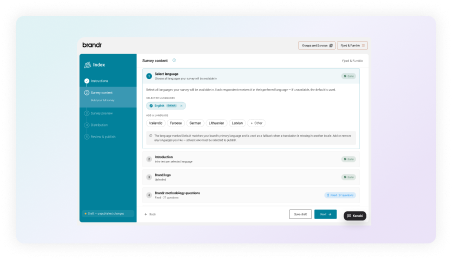
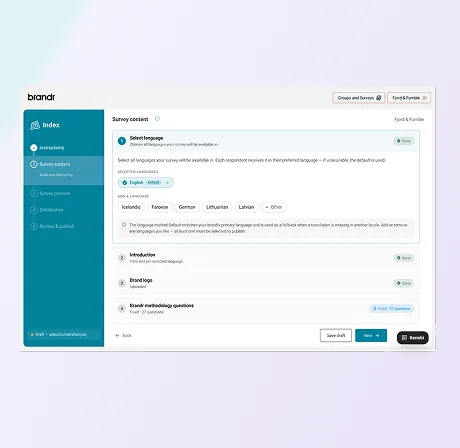
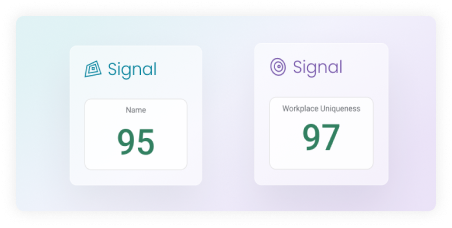
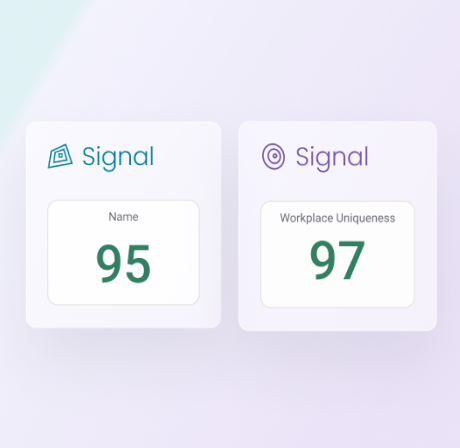
For an HR or People team, the practical question is how to measure the offer in a way that is consistent, comparable over time, and specific enough to act on, rather than relying on a once-a-year engagement survey that was never designed for the purpose. This is the role Brandr Employer Index plays, measuring how employees experience the brand internally across three dimensions, so the alignment between what the organization promises and what employees live becomes visible and trackable rather than assumed. The point is not to produce another report that confirms what leadership hopes is true. It is to surface the gaps honestly, identify them in specific parts of the organization, and give the People team a baseline against which to measure progress. A proposition you measure is one you can improve; one you only assert is one you are hoping holds.
Where this leaves People leaders
Competition for talent is not going to ease, and the organizations that struggle will be the ones still treating their employer value proposition as a statement to be written rather than a commitment to be verified. The ones that do well will know, with evidence, where their proposition is real and where it is aspirational, and they will fix the gaps before those gaps become resignations. The promise on the careers page is only as valuable as the daily experience delivers. Measuring the distance between the two is what turns an employer value proposition from a recruitment artifact into a genuine instrument for keeping the people an organization most wants to keep.


.jpg)
.jpg)