




A brand workshop is a standard service in every brand consulting practice, and it is also one of the easiest pieces of work to deliver badly. The difference between a session that produces real decisions and one that produces a deck of attractive statements is rarely about facilitation skill. It is usually about what was on the table when the session began. A brand workshop run on the strength of opinions in the room can build consensus, but consensus is not the same thing as a decision. The workshops that move clients forward tend to be the ones where the room reacts to evidence rather than generates it.
What a brand workshop is supposed to produce
The point of a brand workshop is not the workshop itself. It is the set of decisions the client can carry out of the room and defend afterward. That distinction matters because brand workshops are easy to enjoy and difficult to evaluate. A well-run session feels productive, with energetic discussion, clear facilitation, and tangible outputs by the end of the day. The harder question is whether those outputs hold up the following week, when the client returns to their organization and has to act on what was decided.
Outputs and outcomes are not the same thing. A brand workshop can produce many outputs: positioning statements, value lists, persona descriptions, archetype selections, and tagline shortlists. These are artifacts. Outcomes are the decisions those artifacts represent and the actions they unlock: a defensible positioning the client will brief future work against, a clear sense of who the brand is for and who it is not for, and a choice about which dimension of the brand to prioritize. A workshop that produces artifacts without outcomes is a workshop the client will struggle to use.
Why most brand workshops fall short
When a brand workshop does not produce real outcomes, the failure rarely shows up during the session. It surfaces afterward, when the client returns to the deliverables and finds them harder to act on than they felt in the moment. The patterns are recognizable.
- The room builds agreement around what people in the room already believe
- The outputs sound like decisions, but cannot be defended outside the workshop
- The exercises generate ideas without a way to choose between them
- Nobody in the room has a clear basis for disagreeing with the loudest voice
Consensus around assumptions, not evidence
The most common failure is that a workshop produces strong agreement on something no one in the room has actually verified. The leadership team aligns on the idea that the brand stands for craftsmanship, innovation, or trust, because the senior people in the room believe it does, and the consensus feels meaningful because it is rare to get everyone on the same page. The problem is that what the people inside the company believe about the brand is not the same as what the market believes. A workshop without data about the latter produces consensus around the former, and the resulting strategy describes the brand the leadership team thinks they have, rather than the one their customers actually experience. The agreement is real; the foundation is not.
Outputs that look like decisions but aren't
A second pattern is mistaking artifacts for decisions. A workshop produces a brand purpose statement, a list of values, an archetype, and a personality wheel. These look like decisions, and they are presented that way. But many of them are descriptive rather than directive: they describe what the brand is supposed to feel like, without specifying what the brand should do differently as a result. A real decision changes future behavior. A purpose statement that any competitor in the category could plausibly adopt is not a decision; it is a sentence. The test for whether a workshop produced a decision is whether the next quarter looks different because of it.
What changes when data enters the room
The workshops that consistently produce real outcomes share one structural feature: somebody brought evidence into the room before the discussion started. That evidence does not replace facilitation, creative thinking, or the judgment of experienced strategists. It changes what the conversation is reacting to, which changes what it can produce.
Perception data as the unblocker
Consider what happens when a client insists, with conviction, that the brand should be positioned as premium, and the room has nothing to test that against. The session can challenge the assumption, push back, propose alternatives, but ultimately, the loudest voice or the most senior person tends to settle the question. Now consider the same room with perception data showing that the market currently sees the brand as expensive for what it delivers rather than as premium. The conversation is no longer about whose opinion is more persuasive. It is about what to do given a finding the client cannot easily dismiss. Evidence in the room does not eliminate disagreement. It changes the kind of disagreement that is possible: from contests of opinion to choices about how to respond to what is actually true. That shift is what allows a workshop to produce decisions instead of consensus around assumptions, because the room now has something firmer than belief to anchor those decisions to.
Building the brand workshop into a measurable engagement
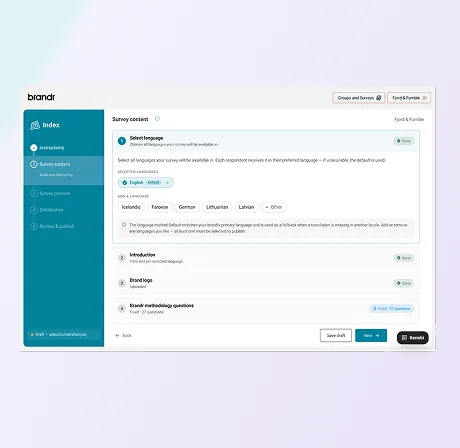
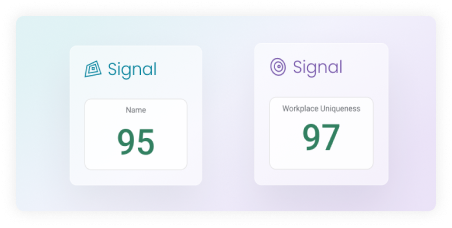
For a brand consultant or agency, the practical question is how to bring evidence into the workshop without turning the engagement into a six-week research project before any creative work can start. This is the role Brandr plays in a consulting practice, providing a structured pre-read on how the client's brand is currently perceived across the dimensions that shape buying behavior, so the workshop opens with a shared picture rather than a blank wall.
What changes is the shape of the session itself. Facilitators spend less time arguing the foundations and more time using them, and the recommendations that come out are easier for the client to carry back into their organization because they are responses to evidence rather than products of a room that happened to agree. The brand workshop stops being a one-off creative event and becomes the visible part of a longer measurement-led engagement, which is also a far more durable commercial relationship.
Where this leaves brand consultants
The brand workshop is not going away as a format, because clients want the collaborative experience and consultants need the engagement model. What is changing is the bar for what counts as a useful workshop. Sessions that rely on the energy in the room and the strength of opinions will keep producing artifacts that look good in the moment and age quickly. Sessions that bring evidence into the room produce decisions that survive the trip back to the client's office, which is the only test of a brand workshop that actually matters.


.jpg)
.jpg)