




Every HR function runs some form of talent attraction. Job postings go up, LinkedIn campaigns launch, the careers page gets refreshed, benefits are highlighted, and recruiters begin outreach. The activity is real, and most of it is measured. What is far less often examined is whether the talent attraction strategy is starting in the right place. In most organizations, it starts at the job posting, which is already too late for the candidates the company most wants to hire. By the time a role is open, the market has already formed a view of what it would be like to work there, and that view is doing more to shape who applies, who responds to outreach, and who accepts an offer than any single campaign will.
What talent attraction strategy actually is
A talent attraction strategy is not the same as a recruitment strategy, and treating them as interchangeable is one of the reasons attraction underperforms. Recruitment is reactive: a role opens, the team sources, screens, and closes the requisition. Talent attraction is proactive and long-horizon: it shapes what the market believes about the company as a place to work, so that when a role does open, the right candidates already have a reason to pay attention.
The distinction matters commercially. A recruitment strategy is measured by time-to-fill and cost per hire. A talent attraction strategy is measured by the quality of the candidates who arrive on their own, the response rate on cold outreach, and the acceptance rate on offers made to the best people. Those are outcomes that recruitment tactics cannot produce in isolation, because they depend on something that was formed months or years before any particular role opened: what the talent market thinks of the company.
Why talent attraction fails when it starts at the job posting
The failure of most attraction efforts is not one of tactics. It is one of timing. By the time a job posting is live, and a recruiter is doing outreach, the decisions that determine who responds have already been made in the candidate's mind, based on what they can find and what they have heard. A team that only begins to think about attraction when a role opens is intervening at the last possible moment in a process that has been running for a long time. The patterns that produce weak attraction are recognizable:
- Cost per hire keeps rising because the strongest candidates are not applying and have to be paid to switch
- Time to fill stretches out because the pipeline of interested candidates was never built
- Offer acceptance rates soften because the company's reputation among candidates is not what leadership assumes
- The best passive candidates ignore outreach, because nothing they have seen about the company makes engagement feel worth the effort
By the time you post, the decision has already been shaped
The candidates most worth hiring are the ones who do not need to be looking. They are performing well, being paid well, and being courted quietly by other companies too. When a recruiter reaches out, the first thing they do is research. They look at the careers page, the leadership team, employee reviews, recent press, and their network. What they find in that thirty-minute check determines whether the conversation goes anywhere. If the company they discover matches what the recruiter promised, engagement continues. If it does not, or if what they find is thin, generic, or contradicted by employee signals, they do not respond, and the recruiter never learns what killed the outreach. This is where most attraction budget quietly leaks: not in the campaign, but in what the candidate found when they went to verify it.
The role of employer brand in real attraction
Talent attraction and employer brand are often discussed as separate initiatives. In practice, one is the outcome of the other. Attraction succeeds when the employer brand is strong enough that qualified candidates want to engage, and it fails when the employer brand is weak, unclear, or contradicted by what candidates actually find. Treating employer brand as a post-hire concern, or as a communications project that lives inside HR, misses the mechanism entirely. Employer brand is the instrument through which attraction happens, not a separate program running alongside it.
Perceived versus actual employer brand
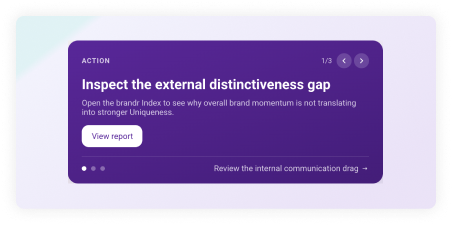
There is often a meaningful gap between what a company believes its employer brand is and what the talent market actually thinks. Leadership tends to describe the company in aspirational terms — innovative, collaborative, mission-driven — and often genuinely believes those descriptions are accurate. The market may hold a different view, shaped by past employee reviews, industry reputation, or the absence of visible signals altogether. When attraction leans on the internal version of the brand while the market holds a different one, outreach lands into skepticism the team never sees. Closing that gap starts with knowing it exists, which requires measuring how the external talent market actually perceives the company, not how the company perceives itself.
Building talent attraction strategy on measurable ground
A talent attraction strategy that will actually change results has to be built on evidence about how the company is currently perceived, both by candidates and by employees. Without that foundation, attraction becomes a series of campaigns that produce inconsistent results because nobody knows what is working and what is being ignored.
What to measure before you launch attraction
Before launching campaigns, there are two categories of measurement worth having in place. The first is external perception: how the talent market sees the company as a place to work, on which attributes the reputation is strong or weak, and how that compares to the employers this company is realistically competing with. The second is internal experience: how current employees describe the day-to-day reality, and whether their experience matches the message the company is putting out to candidates. The distance between the two is what determines whether attraction messaging holds up on contact with reality, because candidates will verify claims through employee reviews, referrals, and their own networks.
Where segmentation changes the strategy
Aggregate perception scores hide variation that matters for attraction. A company may be well regarded overall and poorly regarded by the specific segment it needs to win, whether that is senior engineers, mid-career operators, or candidates in a particular geography. An attraction strategy built on the average will pour effort into channels and messages that reach the wrong people well and the right people poorly. Segmenting perception by role type, seniority, function, and location shows where the brand actually holds and where it needs work, which lets a talent team direct effort at the specific groups where the risk and the opportunity are concentrated.
Turning measurement into attraction that scales
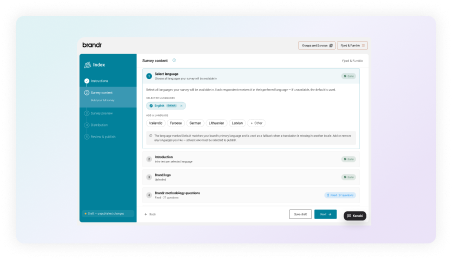
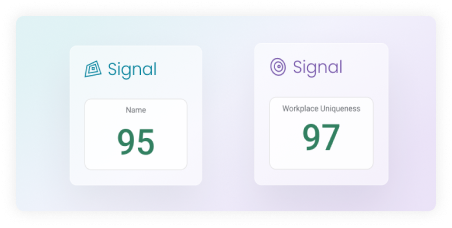
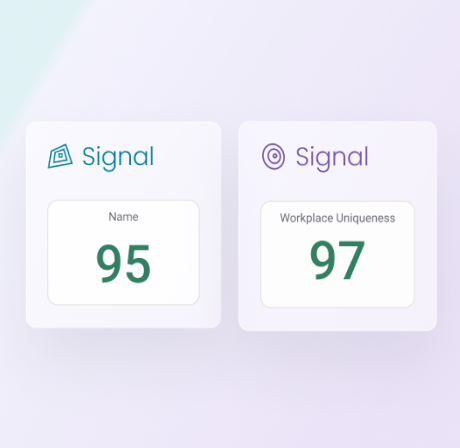
For a talent leader, the practical question is how to build employer brand measurement into the attraction function without turning it into a separate research project. This is the role Brandr Employer Index plays for people teams, measuring how employees experience the brand internally across three dimensions and setting the result against industry benchmarks, so the gap between the promise and the lived experience becomes visible and trackable rather than assumed. The output is not a one-off report. It is a structured baseline that shows where attraction messaging is credible, where it is likely to be contradicted, and where the segments the company most wants to win hold perceptions that need to be addressed before the next campaign launches.
The shift talent teams need to make
Talent attraction is going to keep getting harder, because the candidates worth attracting have more information, more options, and less patience than at any previous point. The teams that consistently pull in strong candidates will not be the ones running louder campaigns. They will be the ones whose talent attraction strategy starts months earlier, in a clear read of how the company is perceived by the market it wants to reach, and adjusts the message and the channels based on what that read actually shows. Attraction earns its results in what candidates find when they check, and building the strategy backward from that check is what makes the effort worth the budget.

.jpg)

.jpg)